Gilbert Salt-Free Systems
Salt-Free Water Conditioners in Gilbert, AZ
Scale control without salt, a brine tank or a drain line, for homes that want less upkeep.
Gilbert Salt-Free Systems
Scale control without salt, a brine tank or a drain line, for homes that want less upkeep.
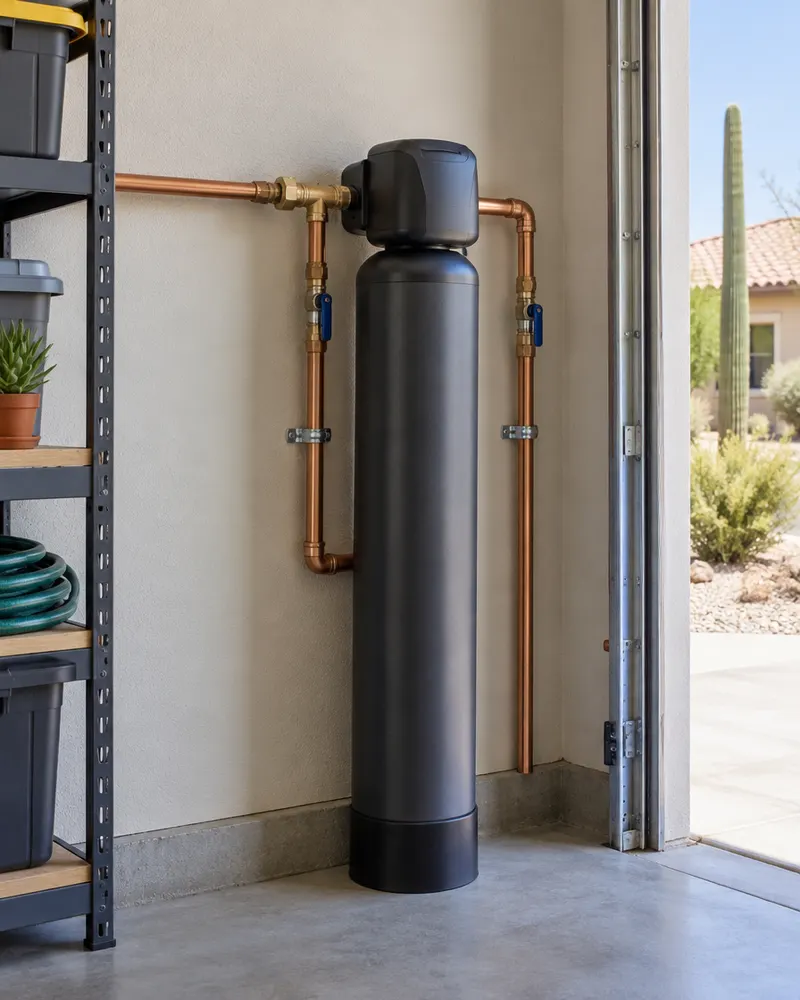
A salt-free conditioner does not remove calcium and magnesium. Instead, the media changes the minerals into tiny crystals that stay suspended in the water and are much less likely to stick to pipes, fixtures and water heaters as scale.
Because nothing is removed, there is no salt to buy, no brine tank and no regeneration water going down the drain. That makes conditioners a good fit for homes without a nearby drain or for homeowners who do not want to haul salt.
The trade-off is that the water is still hard. You will see fewer spots and less scale, but not the slick feel and full soap lather of softened water. We explain the difference at your water test so you can choose.
| Salt-free conditioner | Water softener | |
|---|---|---|
| Removes hardness minerals | No | Yes |
| Reduces scale buildup | Yes | Yes |
| Prevents water spots | Reduces them | Yes |
| Salt and brine tank | None | Yes |
| Drain line needed | No | Yes |
| Regular upkeep | Media change every few years | Add salt, yearly check |
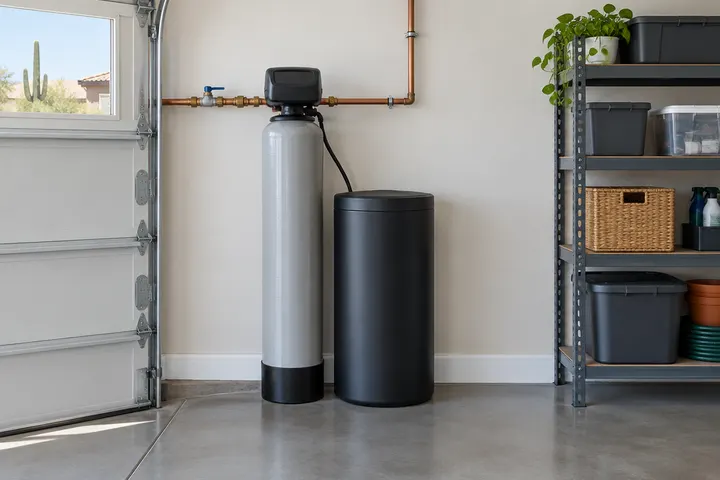
Without a drain near the loop, a conditioner avoids running a new drain line.
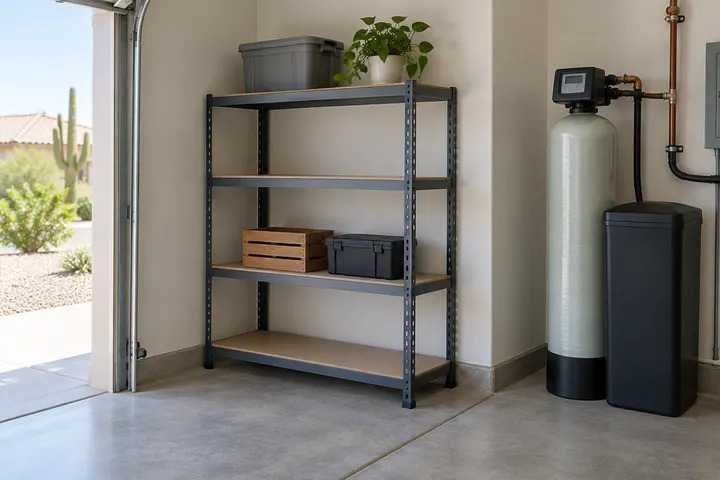
Nothing to refill, which suits busy households and second homes.
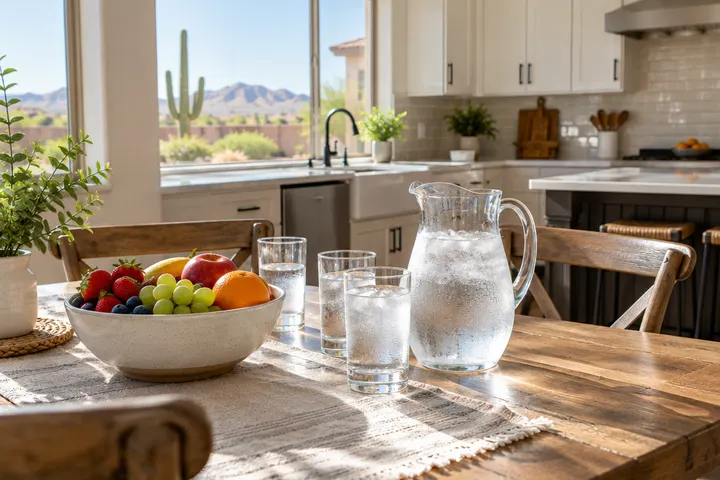
No sodium is added to the water.
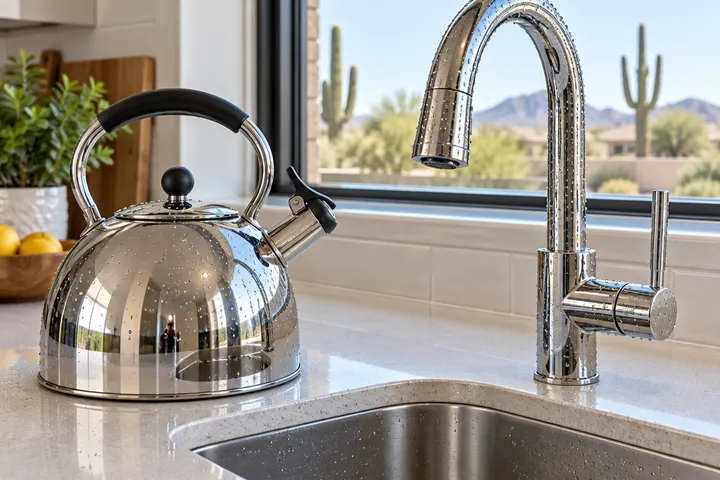
If protecting the water heater and fixtures matters more than soft-feeling water, a conditioner covers it.
No. A softener removes hardness minerals; a conditioner leaves them in but reduces scale. Water from a conditioner still tests as hard.
It reduces spotting and scale, but you may still see some spots on glass because the minerals are still in the water.
Media typically lasts several years before replacement, depending on water use.
Yes. We remove the softener and install the conditioner on the same loop.
We will test your water and walk you through a conditioner and a softener side by side.
Free estimate, no obligation