Gilbert Softener Repair
Water Softener Repair & Service in Gilbert, AZ
Troubleshooting and repairs for softeners that are not softening, are using too much salt, are leaking or will not regenerate.
Gilbert Softener Repair
Troubleshooting and repairs for softeners that are not softening, are using too much salt, are leaking or will not regenerate.
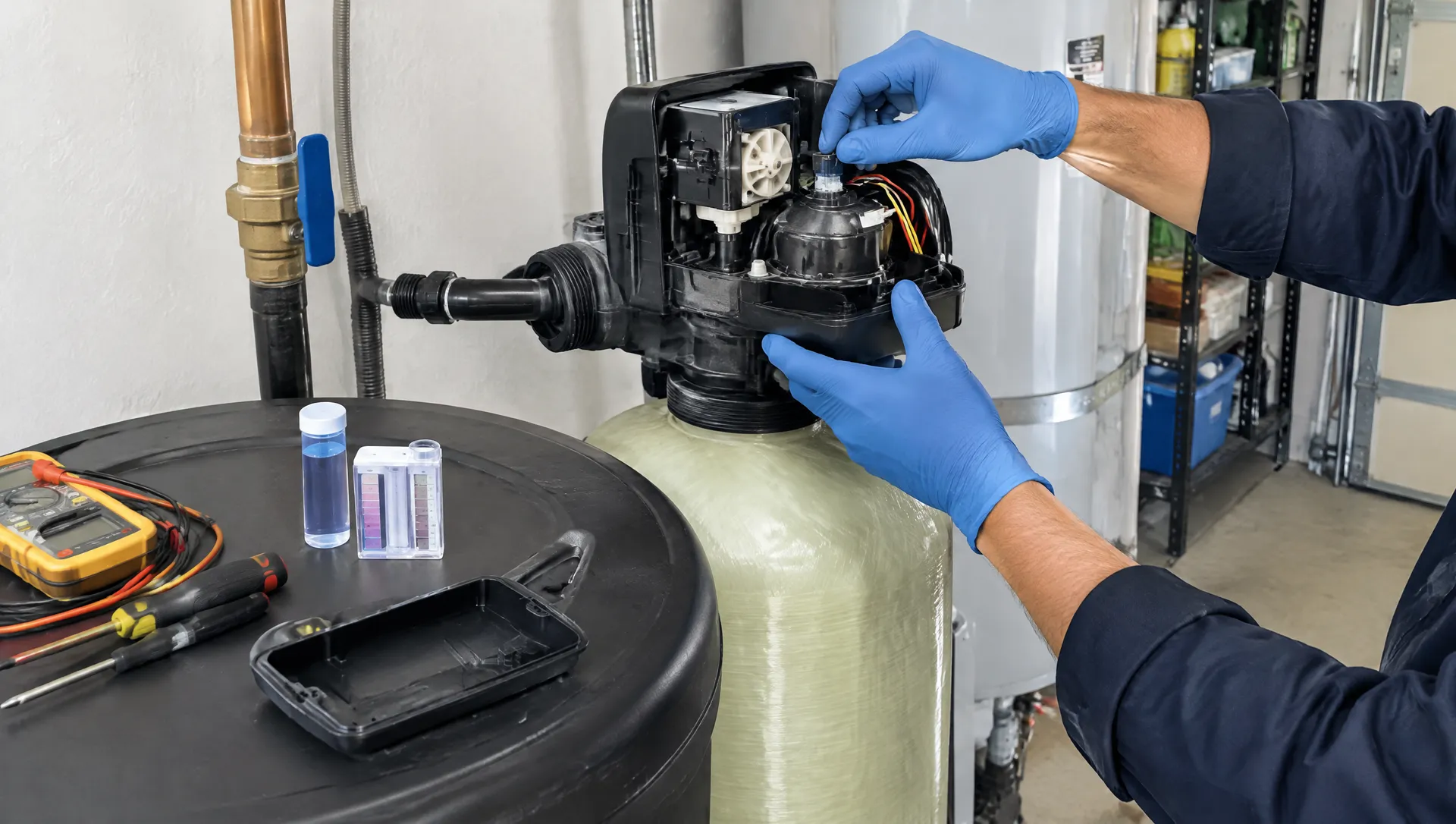
When a softener stops working, hard water comes right back: spots on the glass, scale on the faucets and soap that will not lather. Most problems come down to a handful of causes, and many can be fixed without replacing the system.
We check the valve settings, the brine tank, the injector and lines, and the resin, then tell you whether a repair makes sense or whether the system is near the end of its life. If replacement is the better value, we explain why and give you a written estimate for both.
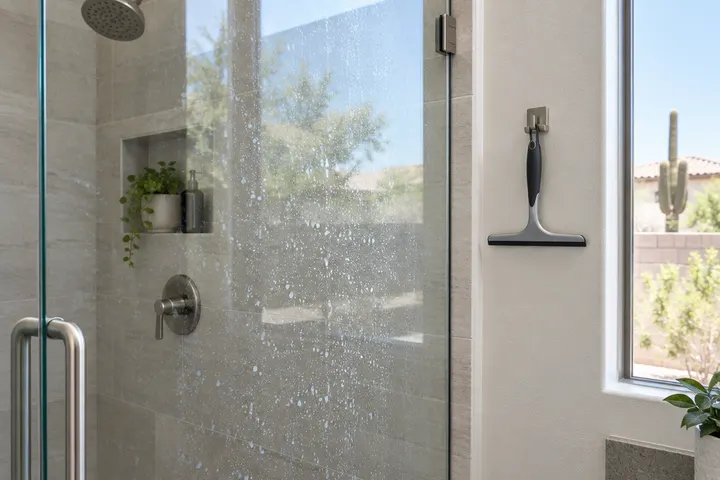
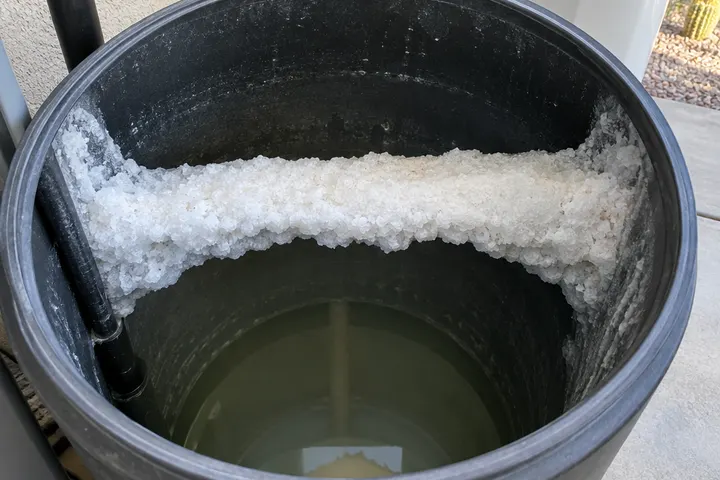
Often a salt bridge in the brine tank, a clogged injector, wrong hardness setting or worn-out resin.
Usually a valve set to regenerate too often or a leak that keeps the system cycling.
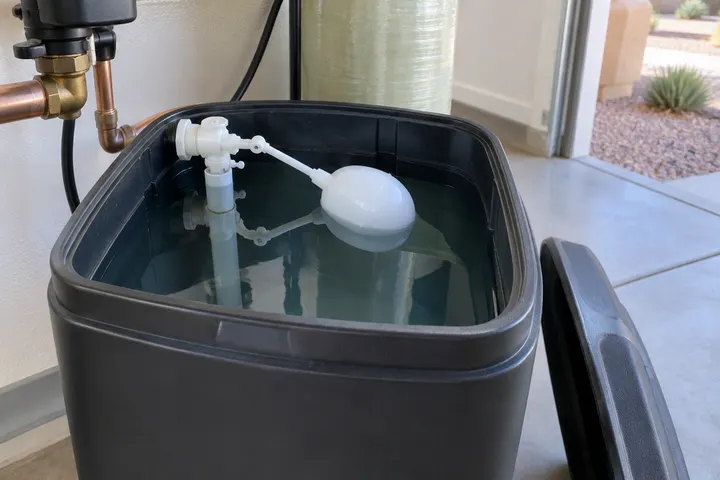
A clogged drain line, injector or float problem can leave the brine tank full of water.
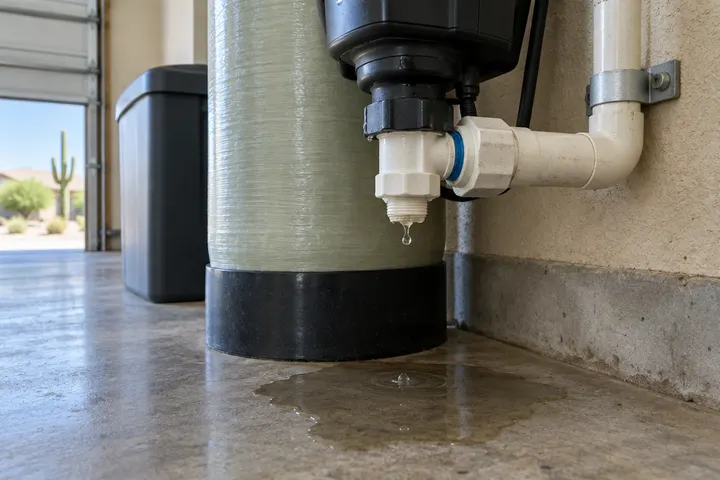
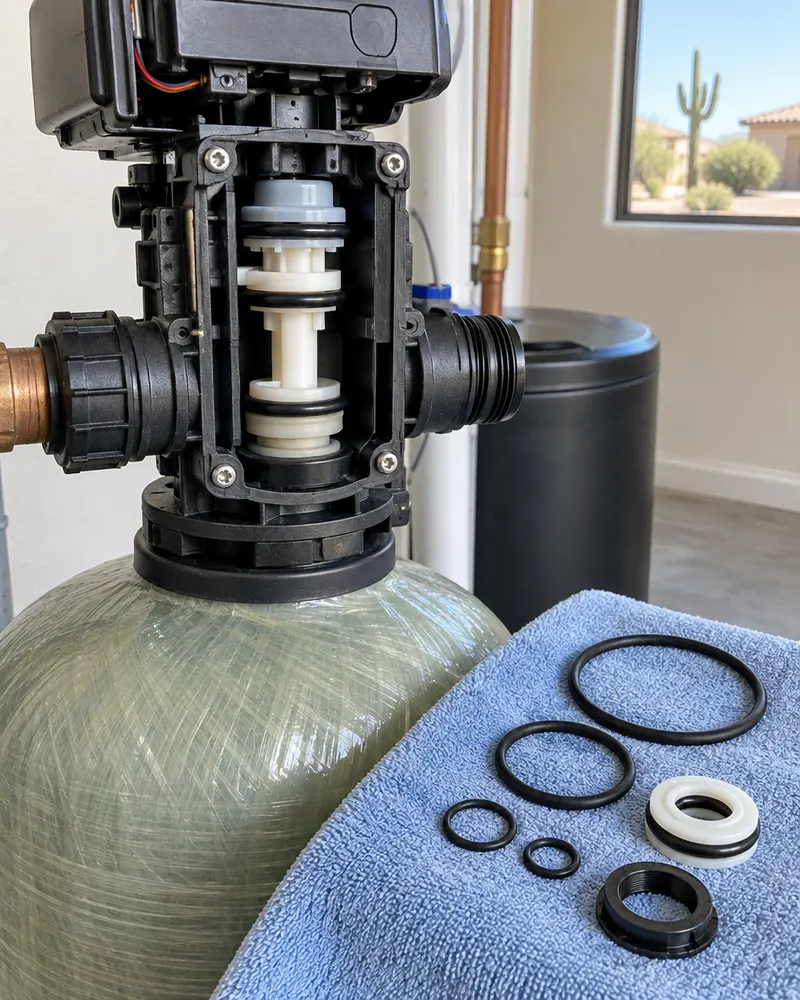
Cracked fittings, worn O-rings or a valve that sticks during regeneration.
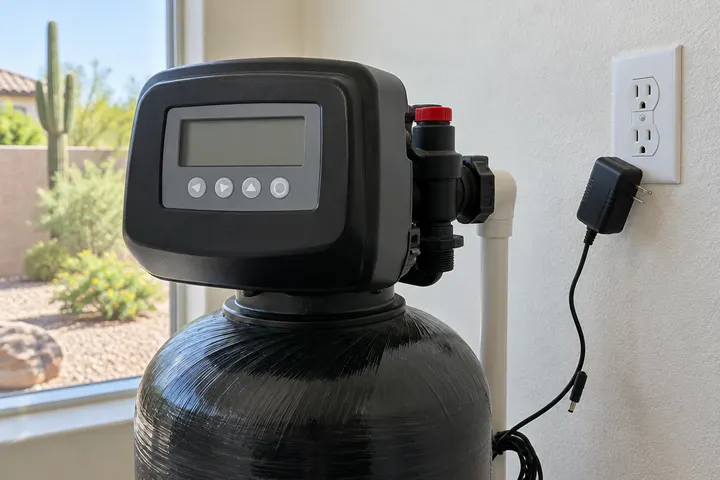
Lost settings after an outage, or a control board that needs replacing.
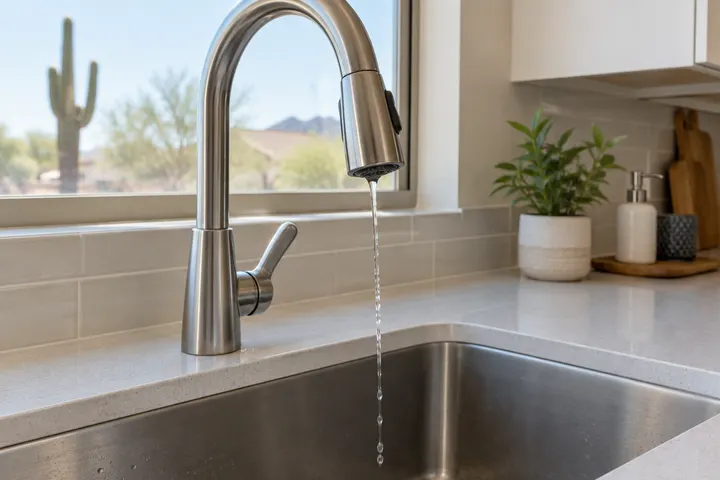
Resin breakdown or a clogged pre-filter can restrict flow through the system.
| Situation | Usually |
|---|---|
| Salt bridge, clogged injector, wrong settings | Repair |
| Worn O-rings, seals or a single valve part | Repair |
| Resin worn out on an otherwise good system | Re-bed the resin |
| Older system with a failing valve and resin | Replace |
Common causes are a salt bridge in the brine tank, a clogged injector, a hardness setting that is too low, or resin that has worn out after many years.
Yes. We work on most common softener brands and valves.
A yearly check of the settings, brine tank and injector keeps most softeners working well.
If the valve and resin are in good shape, repairs are usually worth it. If both are worn, replacement is often the better value.
Tell us what the softener is doing and its brand if you know it. We will diagnose it and give you options.
Free estimate, no obligation